
Paver sealing for Progress Village homes
Paver Sealing in Progress Village, FL
Call (656) 254-6231 for a free paver sealing estimate in Progress Village, from County Road 573 to Interstate 75.
- Brings out deeper paver color
- Fresh joint sand helps lock pavers in place
- Gives weeds less room to grow
- Makes the surface easier to keep clean
- Free estimate, no obligation
Request a Free Estimate
Free, no obligation.
Fast, careful paver sealing in Progress Village
Paver sealing is open to homeowners across Progress Village, from County Road 573 on the west to Interstate 75 on the east. The work covers washing, new joint sand and a fresh coat on driveways, walkways and patios, and the first visit is free. Expect an answer within 1 business day, and often within hours. If you prefer to talk, call (656) 254-6231.
You may know the look already. Years of rain have left your driveway gray, the joints are low, and weeds are pushing through at the edges. After a wash, new sand and a fresh coat, the whole surface reads as one clean color again. To ask about your own walkway or patio, use the quick estimate form.
Why hire a local paver sealing contractor in Progress Village?
Progress Village was planned as a place to own a home, and many owners here have kept the same house for a long time. A local paver contractor respects that, so use the quick estimate form and talk through what your pavers need.
A free look first
The contractor visits your Progress Village home and prices the pavers before anything starts. You owe nothing for the visit.
A price you can check
Companies near the bay post a rate of $1.50 to $2.50 a square foot for the wash, new sand and sealer together. Use that to test any quote.
Care for an older yard
Established yards have mature plants close to the pavers. The contractor protects them while rinsing and sealing.
No pressure to decide
You pick the finish, the day and whether to go ahead. The estimate carries no obligation.
Get Your Free Estimate in Progress Village
Tell us about your pavers in Progress Village.
Free, no obligation
What paver problems show up most in Progress Village?
Joints that have been thinning for years
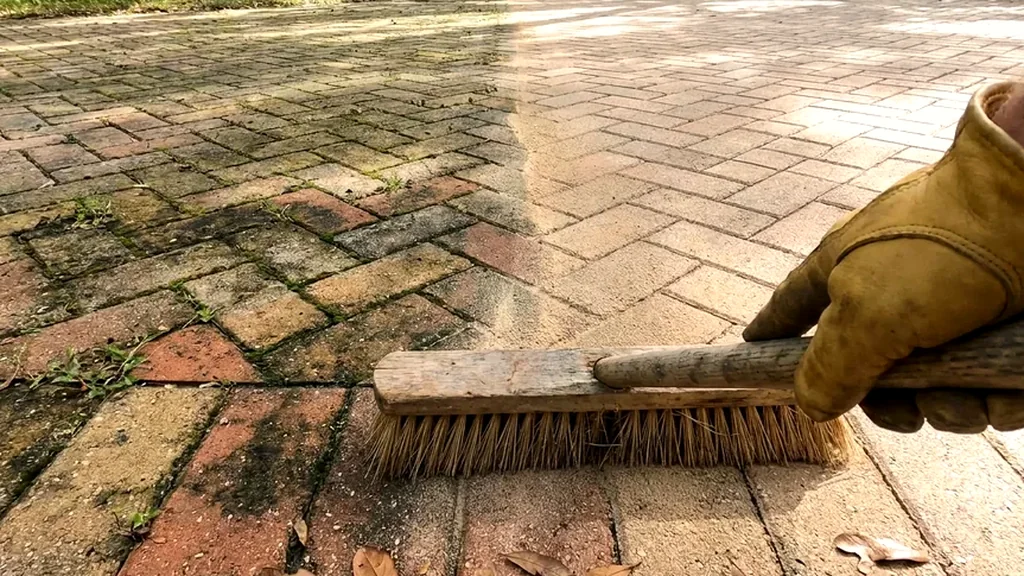
Many Progress Village homes have stood since the 1960s, and a paver area that old has been through a lot of rain. UF extension says most Florida flatwoods soils are sandy and poorly drained, which means water leaves slowly. Water that lingers pulls joint sand out a little at a time. The result is open seams, tilted pavers and weeds that return every spring. Fixing it means cleaning first and then refilling every seam, not just topping off the worst ones. Ask the contractor to show you the depth of the sand before and after. Sand that sits level with the pavers' edges is a good sign. Longtime owners often notice it as a soft, sunken stripe beside the garage door.
Gray film from the wet months
Rain arrives most afternoons through the wet season around Tampa Bay, which runs from late May into October. Pavers near a downspout or under a tree may not dry between storms. Dirt and a green haze settle into that damp surface. Sealer cannot go over it, so the wash always comes first. A shaded side yard shows it first. Leaves pile up in the joints and hold water against the surface. That is why the contractor wants to see the property after a rain, when the problem spots are easy to find. A mature tree beside the walk or a shaded side yard is where it starts.
Sprinkler rust on walkways and drives
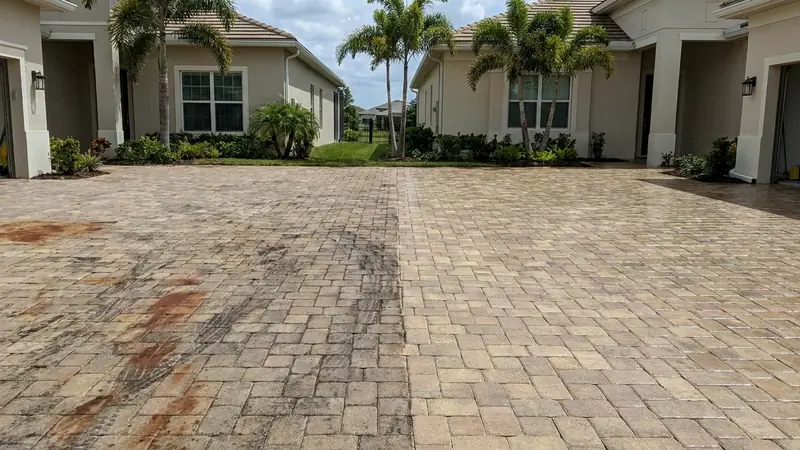
UF extension points to iron in well water as a common source of orange streaks on Florida surfaces. If your sprinklers draw from a well, look along the walkway for rust stripes. They need to be treated before sealing, since sealer would trap them. Changing the spray direction keeps new ones from forming. The streaks usually line up with the sprinkler heads, which makes them easy to spot. A contractor can tell you whether they are rust or just dirt. Either way, they are handled before any coat goes down.
A coat from an earlier owner
In 2000 the census counted 853 households here, and by 2020 there were 4,360. Homes change hands, and a coat of sealer may have been put on by someone long gone. A water-based coat cannot go over a solvent-based one, so the contractor first learns what already covers the pavers. A peeling edge is the usual hint. If nobody knows, a small test spot tells the story. The contractor tries a drop of product in an out-of-the-way corner and watches how it reacts. That small step avoids a peeling mess later.
Wear where the family parks
In 2020, 33.3 percent of households here had children under 18. Cars, bikes and visiting relatives all use the same few feet of driveway. Wear shows at the tire line and by the garage first. A wet look shows scuffs sooner than matte, so it helps to choose with that in mind. Choose the finish for the way the drive is used, not only for looks. A busy family driveway often does better with matte, and a pool or patio may suit a wet look. The contractor can show you both on a sample. Heavy bikes and a basketball hoop on the same drive make that wear show sooner.
What should Progress Village homeowners know before sealing pavers?
Start with the age of your home. Progress Village was founded in 1960 as a planned place for families to buy affordable homes outside Tampa. Pavers on these lots are likely later additions, so what is down could be one owner's work or several. Share what you remember about the pavers as you use the quick estimate form.
The community is small, at 3.2 square miles, and Palm River-Clair Mel, Riverview and Gibsonton touch its edges. Interstate 75 runs along the east side. Houses sit on a tight street plan, so a contractor works close to the curb and to the neighbor. Tell the contractor where your pavers meet the street when you call (656) 254-6231.
Early residents had no street lights, bus service or postal service, and they formed the Progress Village Civic Council to speak for the neighborhood. That habit of looking out for one another still fits a paver job. Ask neighbors who they used, then compare any quote with the published range. When you are ready, use the quick estimate form.
What does paver sealing cost in Progress Village?
Companies publish bids around the bay that generally fall between $1.50 and $2.50 per square foot for washing, sanding and sealing. In Progress Village the swing inside that range usually comes from how low the joint sand is and how much weed growth is in the seams. A short driveway costs less than a driveway plus a back patio. To price your own pavers, use the quick estimate form.
Old sealer and rust stains add work, because each must be handled before the new coat goes on. Easy access keeps the cost down. A walkway along the side of a house takes longer to prepare than an open slab. Call (656) 254-6231 and ask the contractor what applies to your lot.
| Paved area | Typical example | Clean, sand and seal |
|---|---|---|
| 300 sq ft | Small patio or walkway | $450 to $750 |
| 600 sq ft | Two car driveway | $900 to $1,500 |
| 1,000 sq ft | Large driveway or pool deck | $1,500 to $2,500 |
| 1,500 sq ft | Driveway plus pool deck | $2,250 to $3,750 |
Math based on the $1.50 to $2.50 per square foot that Tampa Bay paver companies publish. Your contractor sets the actual price after seeing the surface. Repairs, leveling and stripping failed sealer are usually extra.
How does a paver sealing job work in Progress Village?
Walk the lot and read the surface
The contractor looks over your driveway, walkway and patio. The aim is to see where water runs, where pavers have sunk and whether an older coat is present. Low spots are fixed before sealing because sealer keeps a dip as it is. Mention anything you recall about earlier sealing. Photos of any spots you want fixed help at this stage. A short walk with the contractor covers more than a long phone call. For a home that has been in the family a long time, that history helps the contractor decide how to proceed.
Wash the film and weeds out
Cleaning removes the gray film built up through the rainy months. Weeds are pulled from the joints at this stage. Rust marks near sprinkler heads get their own treatment. Rinse water is kept away from the plants close to the pavers. Strong cleaning does not mean harsh cleaning. The contractor picks a method that suits your pavers and the plants beside them. Edges beside fences, steps and the curb get hand work where a wand cannot reach.
Refill the joints with sand
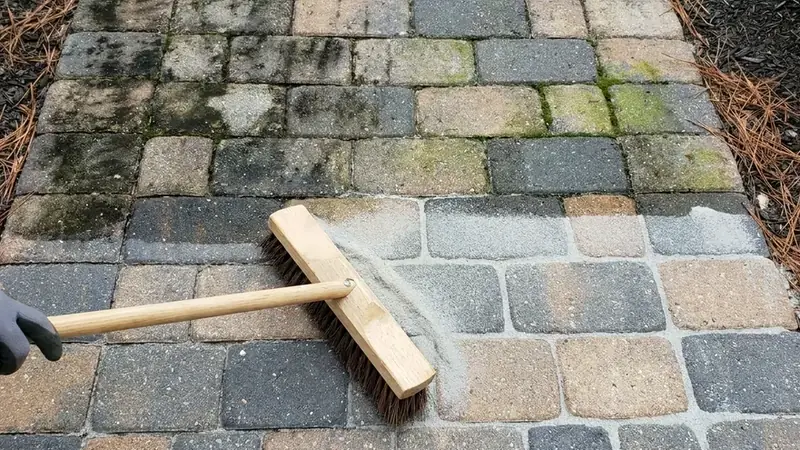
Washing also pulls out loose joint sand, so new sand goes back in before sealing. Slow-draining flat ground makes full joints worth having, because they hold the pavers in place. The contractor sweeps the surface clean afterward. Extra sand is brushed off so it does not stick to wet sealer. Check the joints again by hand after sweeping. If one section still feels low, it gets another pass before the sealer is opened.
Let the pavers dry out
The surface has to be dry before sealer goes on, and wet-season storms make that a morning job. The contractor plans the work for a clear stretch and an early start. If the sky turns, the job waits a day. That patience keeps the finish from going cloudy. Shaded patios dry slower than open driveways, so each area is checked on its own. Dry to the touch is not the same as dry all the way down. Whether it is an hour or a day, the contractor tells you why.
Seal in the finish you picked
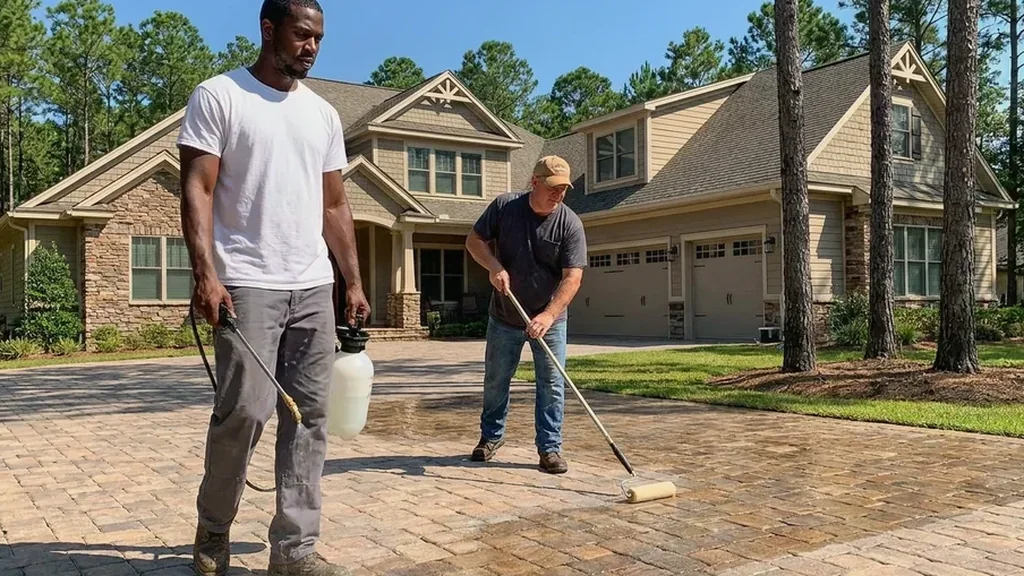
Then the sealer goes on in the finish you chose, matte or wet look. Washy Bear asks for about 24 hours off the surface for feet and 48 for cars. Ask what applies to the product used on your drive. The next coat comes due in two to five years, by the common quote. Move the cars and any planters first, and keep sprinklers off for the wait. You will get a clear time to start using the area again.
Complete paver services in Progress Village
A Progress Village job runs in four moves: a wash, fresh sand, drying time and the coat. The wash takes off film and weeds, and new sand fills each seam. Sealer comes last so it covers clean pavers. To ask how long that takes on your lot, call (656) 254-6231.
Driveways face tires and street runoff, and walkways get the daily trip to the door. Patios in the back catch leaves and shade. Each surface wears differently, so the contractor checks them one by one. Mention which ones you want done when you use the quick estimate form.
Choosing a sealer starts with what already sits on the surface. After that comes the look. Matte stays natural and hides scuffs, and a wet look deepens color. Call (656) 254-6231 to talk through the choice for your Progress Village home.
Timing follows the weather. The wet season means more waiting days, and the sealed surface needs about a day before you walk on it. Dry months let the contractor work with fewer pauses. For a date that suits your street, use the quick estimate form.
Questions to ask before you hire
- What do you do about rust stains left by my sprinkler water?
- Does the estimate include pulling the weeds out of the joints?
- Will you test the sealer on a small spot before you coat my whole driveway?
- What will you do if the sealer dries cloudy or blotchy?
- Can the work be done in two stages without leaving a visible line?
- How long before I can park on the driveway again?
- Which finish will my pavers get, natural, satin or a wet look?
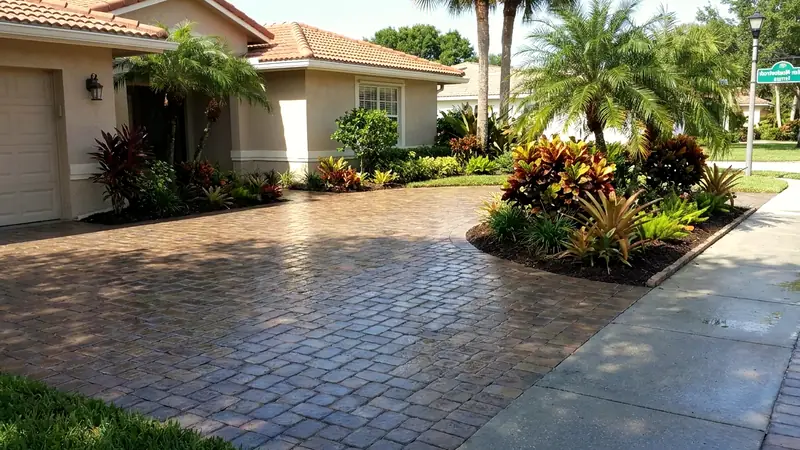
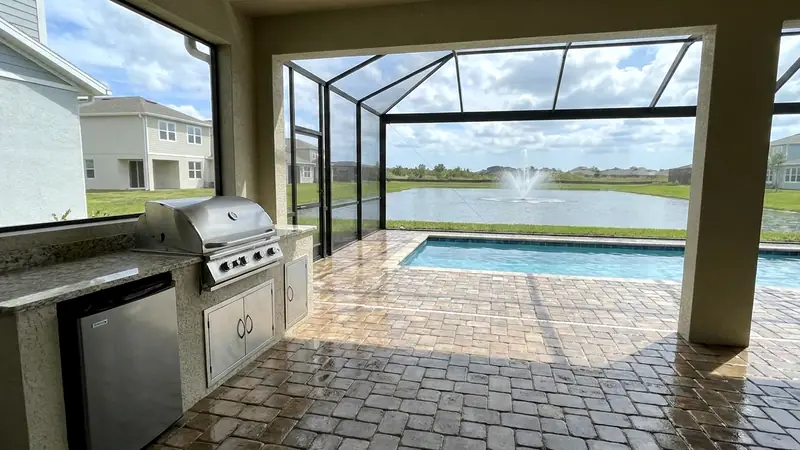
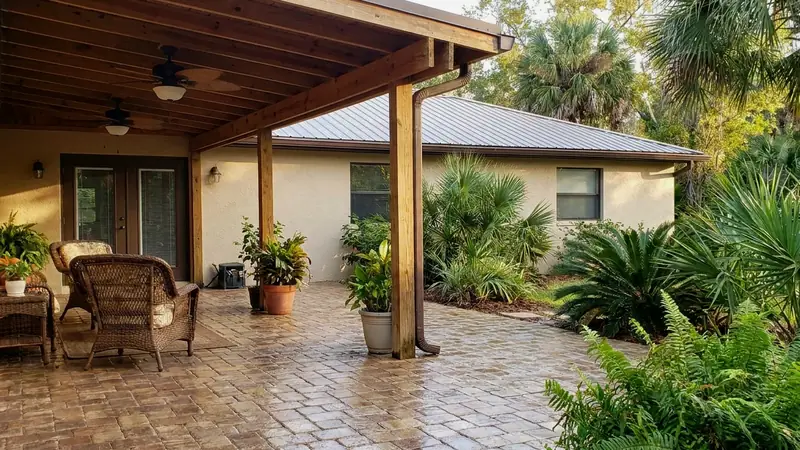
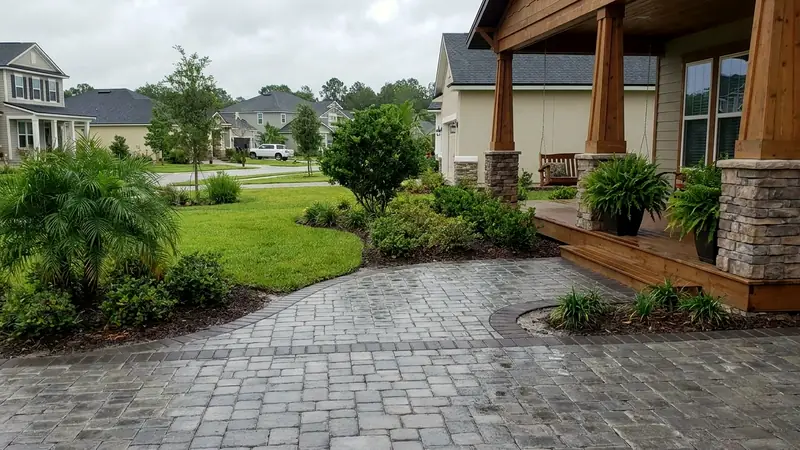
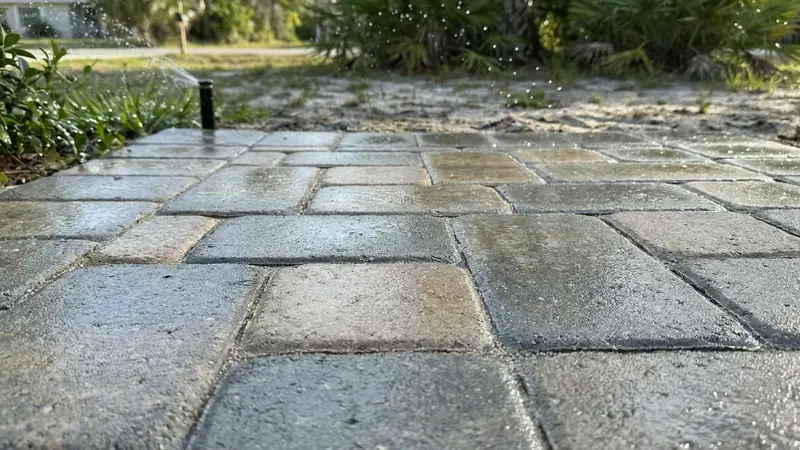
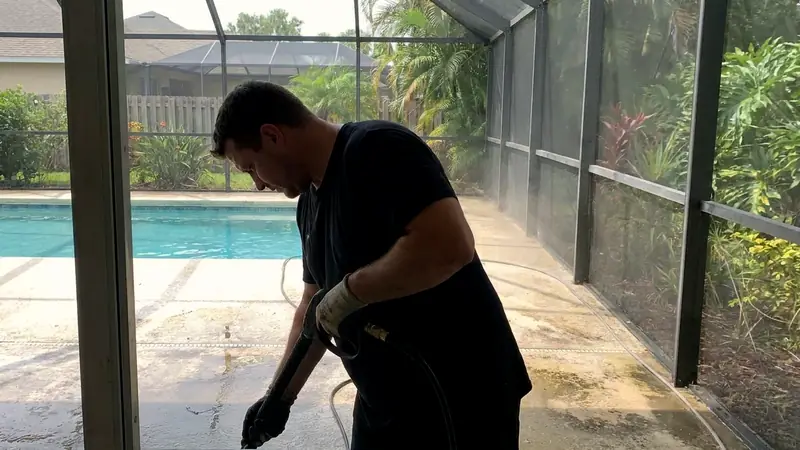
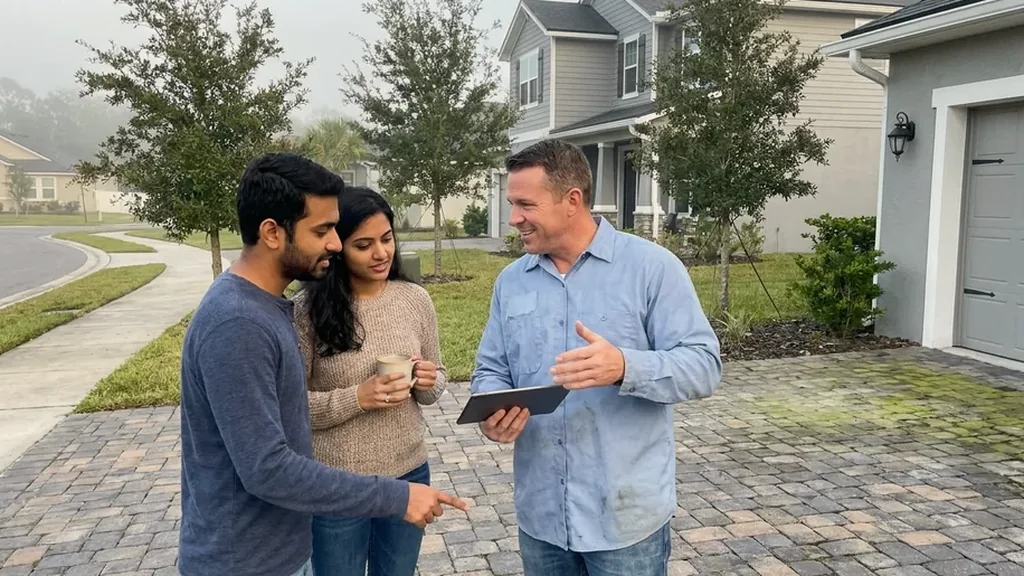
What do sealed pavers look like around Progress Village?
Why local matters in Progress Village
A contractor close to Progress Village can stop by on short notice if a question comes up. The community sits 9 miles southeast of downtown Tampa, so nobody drives far. That makes follow-up simple and keeps scheduling flexible. To start, call (656) 254-6231.
Local contractors also know the sandy ground and the daily storm pattern. They plan for water on the driveway after a downpour and for a damp morning after a wet night. That planning shows up as a dry surface when the sealer goes down. You can use the quick estimate form and ask how a day would be scheduled.
Respect for the neighborhood matters as well. Progress Village homeowners built much of their community themselves, from the civic council to the church and the Little League. A contractor who shows up on time and cleans up fits that tradition. To get a visit on the calendar, use the quick estimate form.
The community lies 9 miles southeast of downtown Tampa, between County Road 573 on the west and Interstate 75 on the east. Describe which side your street is on when you call (656) 254-6231, and a contractor can plan the visit around it.
Progress Village was founded in 1960, and its 2020 housing count stood at 4,590 units. Homes from the early decades may carry older pavers, and newer additions carry newer ones. Tell the contractor which part of the community yours is in when you use the quick estimate form.
How did Progress Village begin, and why does it matter for my pavers?
Progress Village began in 1960 as a place for African American families to buy affordable suburban homes. Early residents had no street lights, no bus and no post office, so they organized. Land near 78th Street once held dairy cattle, and First Baptist Church began here in 1965. If you want a contractor who respects that history, use the quick estimate form.
The community has Jack Lamb Elementary and Progress Village Middle Magnet School of the Arts on its southern edge. Little League fields and church lots give the area its gathering spots. Pavers at those homes have seen decades of use. Call (656) 254-6231 and share where your home sits.
Frequently Asked Questions
What are the drawbacks of sealing pavers in Progress Village?
The main downsides are upkeep and timing. Sealer wears down and must be renewed, and scuffs show sooner on a wet look than on matte. Because the pavers must be dry, a rainy week can push your date back. Ask for the sealer name and write it down for next time.
How much does it cost to get pavers sealed in Progress Village?
Companies in the Tampa Bay area commonly publish $1.50 to $2.50 per square foot for a wash, new sand and a coat. Your total depends on the measured area, lost joint sand and any old sealer. The estimate is free, so you can compare it to that range. Ask for the total area in the estimate so you can compare it with the range.
How often should Florida pavers be sealed again?
The common quote is two to five years between coats, and Washy Bear, which lists a Brandon page, suggests every two to three years. Heavy rain and daily cars push a driveway toward the short end. A good test is whether water beads on the surface. That keeps a future coat from clashing with this one.
Does Progress Village sealing include fresh joint sand?
Yes, a full job washes the pavers and then replaces the sand lost in washing. Full seams keep pavers steady and leave weeds little space. Ask that sand is on the estimate. Think of it as protection for the work you already paid for. Ask the contractor to confirm the sand and the sealer on the written estimate.
How long before I can park on my Progress Village driveway after sealing?
Washy Bear puts foot traffic at about 24 hours and parking at about 48. The product and the humidity can change that. Ask the contractor for the wait on your sealer. A small patch of rain can move the day, so keep the date flexible.
Can the contractor tell what old sealer is on my pavers?
Often the contractor can tell by testing a small spot. This matters because the two kinds of sealer do not layer. If you have a receipt or product name from an earlier owner, share it. It is a quick test and saves a lot of trouble later.
Do weeds in my paver joints return after sealing?
The contractor removes weeds during cleaning, and new sand and sealer leave them little room to start. A stray seed can still sprout in a joint over time. A fresh sealing helps a lot with this. Mowing and edging near the pavers is fine, but keep the sprinklers off for the wait. Pull any weeds near the edge, and the contractor will take it from there.
Will sealing hide cracks or sunken pavers?
No, sealing does not fix them. Sunken or lifted pavers should be repaired first, because sealer keeps a dip as it is. Show the contractor any low spots when they visit. Ask for a quote on repairs separately, so you can see both numbers.
What finish should I pick for a family driveway in Progress Village?
Matte is the easier choice if you want scuffs to stay quiet. A wet look makes color richer, though scuffs stand out more. Think about how many cars and bikes use the drive before you choose. Try a sample on a spare paver or a quiet corner first.
What happens if it rains right after my pavers are sealed?
A fresh coat caught in a downpour can turn cloudy or blotchy. That is why the contractor reads the forecast, starts early and holds the job back if the sky looks wrong. If rain still arrives, you will get a look at the surface and a plan to fix it. Because the wet season brings regular afternoon storms, keep the date flexible.
Can the contractor work around my fence, flower beds and trees in Progress Village?
Yes, that is part of planning the visit. Plants beside the pavers are rinsed or covered, and fence lines are kept clear of spray. Mention any young plants or favorite shrubs when you call, so the contractor can plan the order of work.
Ready for a Free Estimate in Progress Village?
Call (656) 254-6231 and tell us about your pavers.
Free, no obligation